BRUSSELS:
Debt and taxes are throttling Pakistan’s economy. Pakistan’s never ending fiscal profligacy is the underlying reason why we keep going in the intensive care unit asking the same medical team (read: IMF) who keep giving us the same set of treatments, albeit with more powerful medications only to cure our symptoms and failing to cure our disease.
Once the medical team is satisfied that the patient has “stabilised” and out of the intensive care unit and into the recovery room, they will continue to monitor the recovery over a period of time until their next pre-planned visit.
While the patient is in recovery then there are expensive overseas “specialists” that are hired for further medical diagnosis thinking that they might give some “new” advanced treatments for this reoccurring illness.
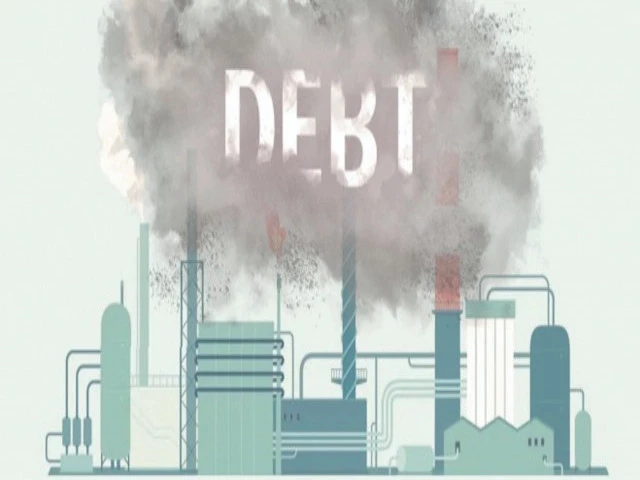
So, the question to ask is: how sick is the patient? Pakistan’s debt is unsustainable on its current path. Gross public debt has hit 70% of GDP in 2025 and the nominal deficit is a whopping 6% of GDP, composed entirely of interest payments. The doomsayers are right to forecast trouble. Net interest payments on debt already exceed the government’s total tax revenues, a recipe for a “disorderly” default and subsequently an economic meltdown.
If Pakistan has to overcome the twin inter-related malaises of fiscal deficit and debt burden, then there is no other option but to dismantle the existing outdated and anti-growth tax system. Governments have two ways to generate revenues – taxation and borrowing. Year-on-year Pakistan has continuously failed in its tax collection and has, unfortunately, excelled in its capacity to borrow to no-end, thus falling into a non-ending debt trap.
The fundamental rule of borrowing is that a county’s foreign debt should never exceed its borrowing capacity. Pakistan today is paying more to service external debt than receiving in new external finance. Our myopic revenue-thirsty government has now come to a point where the borrowing options are diminishing and the debt repayments are increasing.
Tax hikes passed by the current government in the last two budgets have put a brake on economic growth. Companies are closing down, foreign investors are fleeing, and our brightest minds emigrating. We have disincentivised work and investment.
Economics is all about incentives and taxes have consequences. The important point to recognise is that people and businesses don’t work to pay taxes; they work to earn what they can after tax. It is the after-tax rate of return on work, after all, that is the incentive that propels output and employment growth.
The only answer to our twin malaise is sustainable high economic growth. So, what’s the growth solution? The answer is a home-grown, simple, straight-forward set of supply-side economic policies: rationalisation of the tax system, government spending restraint, free trade, sound money, deregulation and privatisation.
Let’s start with our tax policy. There should be few taxes, where those taxes that are chosen to remain have low rates on a broad tax base. Exemptions, deductions, exclusions, credits and carve-outs should be kept to the bare minimum. Low tax rates provide the least incentive for people and businesses to evade, avoid or otherwise not report taxable income. A broad tax base removes as many ways as possible for people to hide their income to avoid paying taxes.
Tariff policy remains revenue target oriented and disrupts the enormous gains from trade. There are production gains from trade, consumption gains as well as economic growth gains. Free trade adds enormously to a country’s growth.
Excessive government spending leads to underperformance and inefficiency at the federal and provincial levels. Pakistan’s government spending has gone amok. Excessive and wasteful spending, way beyond its ability to collect in tax revenues, is a recipe for disaster.
We need a sound monetary policy – slow money growth, low interest rates, a stable currency and keeping inflation in single digits. Fiscal and monetary policies are closely aligned; fiscal discipline leading to fiscal space will reduce the pressure on government borrowing from commercial banks and the State Bank of Pakistan’s propensity to print money.
Government regulations, restrictions, requirements and directives result in excessive collateral damage to the economy. Rules need to be framed to rationalise and coordinate public behaviour and they should be reviewed to make sure each one is justified on a strict cost-benefit basis.
Privatisation needs to be implemented on an urgent basis. State-owned enterprises (SOEs) are a huge net drain on fiscal solvency. These white elephants should be sold off or shut down transparently.
Just about everyone knows how we have put ourselves into this quagmire, but how to get ourselves out of this is not rocket science, it’s common sense. We need to take ownership of these challenges with home-grown solutions and not rely on overseas medical teams overdosing us with Prozac or overseas “specialists” selling us “snake oil”. It’s time to get out of the recovery room and back to work!